
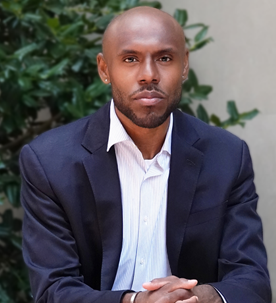
Dustin T. Duncan, ScD
CDUHR - Director, Pilot Projects and Mentoring Core
Columbia University Mailman School of Public Health - Associate Dean for Health Equity and Professor
Columbia University Mailman School of Public Health - Associate Dean for Health Equity and Professor
Email: dd3018@cumc.columbia.edu
Education
ScD, Social and Behavioral Sciences, Harvard T.H. Chan School of Public HealthMS, Social and Behavioral Sciences, Harvard T.H. Chan School of Public Health
BA, Psychology, Morehouse College
Research Interests
Social epidemiology, spatial epidemiology, neighborhoods, health disparities, HIV prevention, substance use BIO
Dustin T. Duncan is an internationally recognized academic leader and equity strategist. He creates and leads initiatives to rearchitect research systems, faculty development, and university design, operationalizing justice-centered higher education scholarship within academic institutions. His work reshapes organizational structure, power distribution, and production infrastructure for greater equity-centered outcomes. He is widely regarded transformative leader at the intersection of public health, equity, and higher education strategy.
His frameworks include the Health Equity Research Production Model, a redesign of research and governance infrastructures and incentive systems to enable equitable knowledge production at scale; The Step-Up Mentorship Model, which combines intentional sponsorship, structured skill-building, and progressive leadership opportunities to accelerate the success and visibility of early-career scholars, particularly those from historically underrepresented backgrounds; and writing accountability strategies, currently being instituted throughout Columbia University in collaboration with the Office of the Vice Provost for Faculty Advancement.
Author of several books and more than 300 other publications, Dr. Duncan is Associate Dean for Health Equity Research and Professor of Epidemiology at Columbia University, a social epidemiologist with a specialization in spatial, trauma-informed, and mobility-based approaches to health equity. He is the founder of the Dustin Duncan Research Foundation, which provides philanthropic support to advance health equity research, leadership development, and community partnerships. Fluent in Swahili, Dr. Duncan also advances purpose-driven research and global health partnerships and equity across East Africa.
A National Institutes of Health fellow at Morehouse College in his early 20s, Dr. Duncan entered Harvard University at age 21, completed postdoctoral training at Harvard and the University of Oxford, was appointed professor at New York University before the age of 30, and earned tenure at Columbia before 40. He was promoted to the rank of Full Professor at age 40, becoming the first Black male tenured full professor in his department. He is currently engaged in legal systems training to further deepen his understanding of governance and institutional accountability.
Dr. Duncan’s long-term vision is for universities to be globally connected, structurally sound, and designed to cultivate both excellence and belonging at scale.
His frameworks include the Health Equity Research Production Model, a redesign of research and governance infrastructures and incentive systems to enable equitable knowledge production at scale; The Step-Up Mentorship Model, which combines intentional sponsorship, structured skill-building, and progressive leadership opportunities to accelerate the success and visibility of early-career scholars, particularly those from historically underrepresented backgrounds; and writing accountability strategies, currently being instituted throughout Columbia University in collaboration with the Office of the Vice Provost for Faculty Advancement.
Author of several books and more than 300 other publications, Dr. Duncan is Associate Dean for Health Equity Research and Professor of Epidemiology at Columbia University, a social epidemiologist with a specialization in spatial, trauma-informed, and mobility-based approaches to health equity. He is the founder of the Dustin Duncan Research Foundation, which provides philanthropic support to advance health equity research, leadership development, and community partnerships. Fluent in Swahili, Dr. Duncan also advances purpose-driven research and global health partnerships and equity across East Africa.
A National Institutes of Health fellow at Morehouse College in his early 20s, Dr. Duncan entered Harvard University at age 21, completed postdoctoral training at Harvard and the University of Oxford, was appointed professor at New York University before the age of 30, and earned tenure at Columbia before 40. He was promoted to the rank of Full Professor at age 40, becoming the first Black male tenured full professor in his department. He is currently engaged in legal systems training to further deepen his understanding of governance and institutional accountability.
Dr. Duncan’s long-term vision is for universities to be globally connected, structurally sound, and designed to cultivate both excellence and belonging at scale.
Projects
Principal Investigator, Cannabis Use, PrEP and HIV Transmission Risk. Active
Principal Investigator, Characterizing Sleep, ART Adherence and Viral Suppression. Active
Principal Investigator, Social Network and Technology-Driven Health Equity Research in NYC. Active
Principal Investigator, Activity Space Neighborhoods, Drug Use and HIV Among Black MSM in the Jackson, MS MSA. Completed
Principal Investigator, Feasibility Assessment of Real-Time Geospatial Methods to Explore Social and Spatial Contexts of Substance Use and HIV Risk in YMSM. Completed
Principal Investigator, Formative Research on How to Deliver Alcohol Interventions in the Context of HIV Prevention and Care among Black Sexual Minority Men. Completed
Principal Investigator, Health App Use among Verizon Users. Completed
Principal Investigator, Impact of Neighborhoods and Networks on HIV Prevention and Care Behaviors Among Black MSM in the Deep South. Completed
Principal Investigator, Impact of Social Cohesion and Social Capital in PrEP Uptake and Adherence Among Transwomen of Color. Completed
Principal Investigator, MyPEEPs Mobile LITE: Limited Interaction Efficacy Trial of MyPeeps Mobile to Reduce HIV Incidence and Better Understand the Epidemiology of HIV among YMSM. Completed
Principal Investigator, Neighborhood Activity Space, Drugs and HIV Risk Among Black MSM in the Deep South. Completed
Principal Investigator, Neighborhoods, Mobility and HIV Among Young MSM. Completed
Principal Investigator, PrEP Uptake and Adherence among Young Black MSM: Neighborhood and Network Determinants. Completed
Principal Investigator, Promoting Social Capital for Increased HIV Prevention and Care Among Sexual Minority Men in Nairobi, Kenya. Completed
Publications
Recent
Kim B, Regan SD, Moline T, Whalen AM, Barreto GA, Chaix B, Khalifa A, Shrader CH, Brewer R, Flores JM, Schneider JA, Duncan DT (2026).
Advancing neighborhood exposure assessment with GPS-based mobility data: Toward theoretically driven standardized approaches in population health research
American Journal of Epidemiology [Epub 2026 Sep 10]. doi: 10.1093/aje/kwag205.
Advancing neighborhood exposure assessment with GPS-based mobility data: Toward theoretically driven standardized approaches in population health research
American Journal of Epidemiology [Epub 2026 Sep 10]. doi: 10.1093/aje/kwag205.
Duncan DT, Park SH, Merriman J, Furuya A, Torrats-Espinosa G, Radix A, Lim S, Trihn-Shevrin C, Callander D, Kidd J (2026).
Associations between contact with the criminal legal system and substance use: The trying to understand relationships, networks and neighborhoods among Transgender Women of Color Study
LGBT Health, 13 (375-383), 375-383. doi: 10.1177/23258292261475704.
Associations between contact with the criminal legal system and substance use: The trying to understand relationships, networks and neighborhoods among Transgender Women of Color Study
LGBT Health, 13 (375-383), 375-383. doi: 10.1177/23258292261475704.
Grov C, D'Angelo AB, Mirzayi C, Dearolf M, Hoeppner E, Guo Y, Richards N, Ehsan R, Nash D, Patel VV, Duncan DT, ...Carrico AW (2026).
High motivation but low access to PrEP: Social determinants undermine HIV prevention among sexual and gender minority people who use methamphetamine
AIDS and Behavior [Epub 2026 Aug 11]. doi: 10.1007/s10461-026-05265-5. PMCID: PMC13556184.
High motivation but low access to PrEP: Social determinants undermine HIV prevention among sexual and gender minority people who use methamphetamine
AIDS and Behavior [Epub 2026 Aug 11]. doi: 10.1007/s10461-026-05265-5. PMCID: PMC13556184.
Bond KT, Williams PM, Paige M, Lam I, Hart K, Matthews D, Smith W, Koffler E, Zhang H, Kelvin EA, Frye V, Duncan DT (2026).
Designing pleasure-centered, culturally relevant PrEP messaging for Black gay, bisexual, queer, same-gender-loving, and other men who have sex with men (SGL/MSM) in New York City
AIDS and Behavior, 30 (8), 2513-2523. doi: 10.1007/s10461-026-05077-7. PMCID: PMC13570437.
Designing pleasure-centered, culturally relevant PrEP messaging for Black gay, bisexual, queer, same-gender-loving, and other men who have sex with men (SGL/MSM) in New York City
AIDS and Behavior, 30 (8), 2513-2523. doi: 10.1007/s10461-026-05077-7. PMCID: PMC13570437.
Bonnewit I, Schnall R, Garofalo R, Duncan DT, Wood OR, Almodovar M, Xiao F, Kuhns LM (2026).
An evaluation of social media and geospatial dating apps for recruitment of a national sample of young men who have sex with men in the LITE-2 study
AIDS and Behavior, 30 (8), 2584-2591. doi: 10.1007/s10461-026-05083-9. PMCID: PMC13486057.
An evaluation of social media and geospatial dating apps for recruitment of a national sample of young men who have sex with men in the LITE-2 study
AIDS and Behavior, 30 (8), 2584-2591. doi: 10.1007/s10461-026-05083-9. PMCID: PMC13486057.
Notable
Neighborhoods and health. (2nd ed.)
New York: Oxford University Press.
Duncan DT, Kawachi I, Subramanian SV, Aldstadt J, Melly SJ, Williams DR (2014).
Examination of how neighborhood definition influences measurements of youths’ access to tobacco retailers: A methodological note on spatial misclassification
American Journal of Epidemiology, 179 (3), 373-381. doi: 10.1093/aje/kwt251. PMCID: PMC3895093.
Duncan DT, Kapadia F, Halkitis PN (2014).
Examination of spatial polygamy among young gay, bisexual, and other men who have sex with men in New York City: The P18 cohort study
International Journal of Environmental Research and Public Health, 11 (9), 8962-8983. doi: 10.3390/ijerph110908962. PMCID: PMC4199000.
Dr. Duncan's Google Scholar Profile
Selected Press